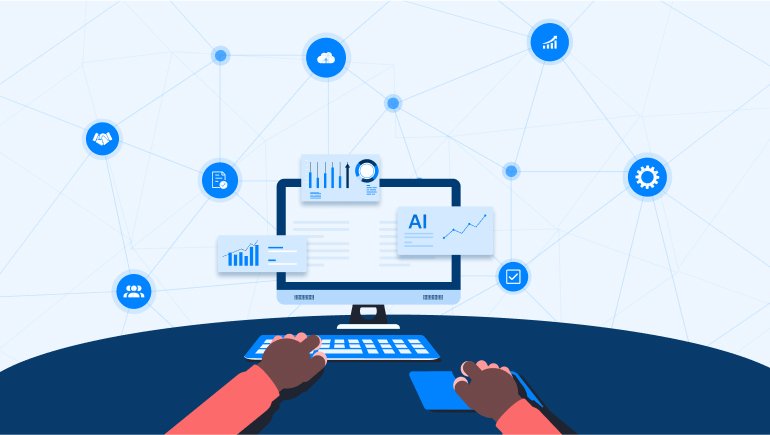
In today's fast-paced talent landscape, efficiency isn't just a buzzword for HR; it's the bedrock of competitive advantage. The days of manual, siloed HR processes are quickly fading, replaced by dynamic, integrated HR tech stacks designed to automate, analyze, and empower. At the forefront of this evolution is the strategic incorporation of AI, particularly in foundational tasks like crafting job descriptions. Integrating AI job description tools with your existing HR tech stack isn't merely about adding another piece of software; it’s about creating a seamless, intelligent recruitment ecosystem that dramatically streamlines how you find, attract, and hire top talent.
The move towards a truly connected HR environment marks a significant shift, transforming HR from a cost center into a strategic partner. It’s about leveraging technology to not just do things faster, but to do them smarter, more consistently, and with a keen eye on the human element that ultimately drives success.
At a Glance: What You'll Learn
- The Power of an Integrated HR Tech Stack: Understand how a connected suite of tools enhances HR productivity, reduces costs, and improves the employee experience.
- Why AI Job Descriptions Matter: Discover how AI addresses common pitfalls in job ad creation, from bias to inconsistency, and speeds up the recruitment funnel.
- Seamless Integration Points: Explore how AI job description tools connect with your ATS, Talent Intelligence platforms, and other recruitment tech.
- Your Step-by-Step Integration Playbook: A practical guide to auditing your current systems, selecting the right tools, planning the integration, and ensuring a smooth rollout.
- Navigating Challenges & Best Practices: Learn to anticipate and overcome common integration hurdles, focusing on security, compliance, and ethical AI use.
- Measuring Impact: Identify key metrics to track the real-world benefits of a streamlined, AI-powered recruitment process.
The Modern HR Tech Stack: Your Digital Backbone
Think of your HR tech stack as the central nervous system of your people operations. It's a carefully curated collection of integrated software, platforms, and applications that digitalize and enhance nearly every HR function – from the initial spark of recruitment to the ongoing pulse of performance management. When built effectively, this stack does more than just automate; it amplifies HR's impact, driving a reported 40% increase in process efficiency and a 30% reduction in administrative time across organizations.
A robust HR tech stack typically organizes around key categories:
- Core HR Solutions: These are the foundational elements, managing fundamental employee information and processes. This includes Human Resources Information Systems (HRIS) and Human Capital Management (HCM) platforms for storing employee data, payroll solutions for automated payments, and compensation/benefits software for equitable management.
- Recruiting Technology: This category focuses on attracting, evaluating, and hiring talent. It encompasses Applicant Tracking Systems (ATS) to manage candidates, pre-employment assessment tools, video interview platforms, employee referral software, and recruitment marketing platforms for employer branding.
- Employee Experience Solutions: Designed to cultivate a thriving culture, these tools span onboarding software, rewards and recognition platforms, engagement solutions (like pulse surveys), performance management software, Learning Management Systems (LMS) for development, and even AI-powered HR chatbots.
The true power of this stack, however, lies in its integration. Disconnected tools lead to data silos, manual re-entry, and inefficiency – precisely what a well-designed stack aims to eliminate.
Enter AI: Revolutionizing the Humble Job Description
For decades, the job description (JD) has been the cornerstone of recruitment. Yet, it's also been a source of significant friction: subjective language, inconsistent formatting, unintentional bias, and agonizingly slow approval processes. Crafting effective JDs required a mix of art and science, often resulting in generic, uninspiring text that failed to attract the right talent or align with company culture.
This is where artificial intelligence steps in. An AI job description generator represents a significant leap forward, transforming a time-consuming, often flawed task into a streamlined, strategic advantage. These tools leverage natural language processing (NLP) and machine learning to analyze successful job descriptions, industry benchmarks, and even your company's existing data to:
- Generate High-Quality Drafts Instantly: Say goodbye to staring at a blank page. AI can produce comprehensive, well-structured JDs in minutes.
- Ensure Consistency and Brand Voice: Maintain uniform language, tone, and formatting across all your job postings, reinforcing your employer brand.
- Mitigate Bias: AI can identify and flag potentially biased language (e.g., gendered terms, ageist phrases), helping you create more inclusive job descriptions that appeal to a broader, more diverse talent pool.
- Optimize for SEO and ATS: Craft descriptions that are rich in relevant keywords, ensuring they rank higher in job board searches and are easily parseable by Applicant Tracking Systems.
- Tailor for Specific Roles and Seniority: Adapt language and requirements to perfectly match the nuances of different positions, from entry-level to executive.
The impact? Faster time-to-fill, higher quality applications, and a significant reduction in the administrative burden on your recruitment team.
Why Seamless Integration Isn't Optional, It's Essential
Having a fantastic AI job description generator is one thing; making it a force multiplier for your HR operations is another. The real magic happens when these AI tools are seamlessly integrated into your broader HR tech stack. This isn't just about convenience; it's about unlocking a cascading series of benefits:
- Eliminating Data Silos and Manual Entry: Without integration, you're copying and pasting JDs from one system to another, introducing errors and wasting precious time. Integration ensures that a JD crafted in your AI tool flows directly into your ATS, recruitment marketing platform, and even your HRIS.
- Accelerated Recruitment Cycle: Imagine generating a highly optimized job description in minutes, pushing it directly to your ATS, and then having that ATS automatically syndicate it to job boards – all with minimal human intervention. This kind of speed is crucial in competitive markets, leading to up to a 30% reduction in time-to-hire, particularly when combined with talent intelligence.
- Enhanced Candidate Experience: Consistent, clear, and engaging job descriptions lead to better-informed applicants. When JDs are accurate and easy to find, candidates have a smoother journey, improving their perception of your employer brand.
- Improved Data Accuracy and Analytics: With integrated systems, data about job descriptions (e.g., keyword performance, application rates for specific phrasing) can be easily tracked and analyzed alongside other recruitment metrics. This provides a holistic view, leading to 60% more informed decision-making.
- Cost Savings: Reducing manual effort, accelerating time-to-hire, and improving the quality of applications all translate directly into operational cost savings. Less time spent on administrative tasks frees up recruiters to focus on high-value candidate engagement.
- Scalability: As your organization grows, manual processes break. An integrated stack allows you to scale your recruitment efforts efficiently without exponentially increasing headcount, making it easier to leverage new technologies like a robust AI job description generator.
Mapping AI Job Descriptions to Your Existing Stack
Integrating AI JD tools means connecting them to the specific parts of your HR tech stack that directly interact with job postings and candidate data.
Applicant Tracking Systems (ATS): The Primary Handshake
Your ATS is the central hub for managing applicants. This is the most critical integration point for an AI job description tool.
- Seamless Publishing: An integrated AI tool allows you to generate a JD and publish it directly to your ATS with a single click. No more copy-pasting into different fields.
- Enhanced Search & Matching: With AI-optimized JDs flowing into your ATS, candidate matching algorithms can perform better. The ATS can more accurately identify candidates whose resumes align with the detailed, keyword-rich requirements set by the AI.
- Version Control: Ensure that the most current, approved version of a JD is always what's in your ATS, preventing outdated or inconsistent postings.
Talent Intelligence Platforms: Fueling Strategic Insights
Talent Intelligence tools provide real-time insights into market dynamics, talent trends, and candidate availability. Integrating AI-generated JDs enriches these platforms significantly.
- Precise Market Mapping: When JDs are consistently structured and rich in accurate keywords, talent intelligence platforms can more effectively map demand for specific skills against market supply.
- Proactive Pipeline Building: Platforms like Draup for Talent, which leverage AI, can use the detailed requirements from your AI-generated JDs to cultivate robust talent pipelines, identify ideal talent, and even strategize global workforce expansions. This leads to a proactive, rather than reactive, approach to hiring.
- Data-Driven Reskilling: Insights from AI-powered JDs can inform internal reskilling initiatives by highlighting emerging skill gaps or shifting requirements for existing roles.
Recruitment Marketing Platforms: Consistent Branding & Reach
Your recruitment marketing platforms are where your job openings go out to the world – career sites, social media, job boards.
- Consistent Employer Branding: Ensure that every job description shared across these platforms adheres to your brand voice and messaging, optimized by AI.
- Targeted Advertising: AI-generated JDs can be structured to better inform recruitment marketing campaigns, allowing for more targeted advertising based on specific role requirements and candidate personas.
Core HR/HRIS: Data Consistency for Future Planning
While not a direct, day-to-day integration point for JD creation, maintaining consistency between your recruiting tech and your core HRIS is vital for long-term workforce planning. Future analytics on retention rates, performance by role, or compensation benchmarks will rely on accurate, consistent data that originates early in the recruitment process.
The Integration Playbook: A Step-by-Step Guide
Successfully integrating AI job description tools with your HR tech stack requires a thoughtful, strategic approach.
1. Audit & Assess Your Current Stack and Processes
Before you buy anything new, understand what you already have.
- Identify Pain Points: Where are your current JD processes breaking down? Is it bias, time, inconsistency, or lack of engagement?
- Review Existing Workflows: Map out how job descriptions are currently created, reviewed, approved, and published. Who are the stakeholders? Where are the bottlenecks?
- Assess Current Technology: Which systems are involved? What are their integration capabilities (APIs, native connectors)? Are there gaps that AI could fill? This initial audit is crucial for determining the most urgent technology needs, especially if you have budget constraints.
2. Define Clear Objectives and "Must-Have" Features
What do you want to achieve with this integration?
- Specific Goals: "Reduce time-to-fill by 15% for key roles," "Increase candidate diversity by 20%," or "Standardize JD format across all departments."
- Prioritize Needs: Distinguish between "must-have" features (e.g., bias detection, ATS integration) and "nice-to-have" features (e.g., multilingual support, advanced analytics). This will guide your vendor research.
3. Research and Vendor Selection
With objectives in hand, dive into the market.
- Explore AI JD Tools: Look for a robust AI job description generator that aligns with your defined needs. Consider organization size, scope, and price range.
- Integration Capabilities: This is paramount. Does the AI tool offer native integrations with your existing ATS or other key platforms? Does it have robust APIs that allow for custom connections? Check with vendors about their existing integrations.
- User-Friendliness: The best tech is useless if no one uses it. Schedule demos and free trials to assess ease of use for HR teams, hiring managers, and even candidates.
- Security & Compliance: Verify the vendor's data security protocols and compliance with relevant regulations (e.g., GDPR).
- Vendor Support: Assess their customer support and training resources.
4. Plan the Integration Architecture
This is where the technical details come into play.
- Data Flow Mapping: Precisely define how data (the JD content, metadata, approval status) will move between the AI tool, your ATS, and other systems.
- API vs. Native Connectors: Decide whether to use pre-built native integrations (simpler) or custom API integrations (more flexible but complex).
- Phased Rollout Strategy: Consider a pilot program with a small team or specific department before a full-scale deployment.
5. Pilot, Test, and Iterate
Don't launch everything at once.
- Pilot Program: Implement the integrated solution in a controlled environment. Gather feedback from early adopters.
- Thorough Testing: Test all data flows, features, and user journeys. Look for broken links, incorrect data transfers, or usability issues.
- Feedback Loops: Actively solicit feedback from HR, hiring managers, and even candidates (if applicable). Be prepared to make adjustments and refine processes based on this input.
6. Train Your Team and Foster Adoption
Technology is only as good as its users.
- Comprehensive Training: Provide clear, accessible training for all users on how to effectively use the new AI job description tools and the integrated workflow.
- Championing Digital Dexterity: Encourage your HR team to embrace new tools and stay updated on trends. Highlight the benefits to their daily work.
- Ongoing Support: Establish clear channels for questions and technical support.
Navigating the Nuances: Challenges and Pitfalls
While the benefits are clear, integrating new technology isn't without its hurdles.
- Data Silos Persistence: Even with integration efforts, older, disconnected systems or manual workarounds can create new silos. Constant vigilance is needed.
- Integration Complexity: Connecting disparate systems can be technically challenging, especially if vendors don't offer robust, open APIs. This is why thorough research on "consider integrations" is vital.
- Vendor Lock-in: Relying too heavily on proprietary systems can limit future flexibility. Prioritize solutions with open standards and strong API documentation.
- Resistance to Change: Some team members might be wary of new technology, fearing job displacement or a steeper learning curve. Effective change management and clear communication are key.
- Bias in AI: While AI can help mitigate bias, the algorithms themselves can inadvertently perpetuate biases present in their training data. Continuous monitoring and ethical oversight are crucial.
- Security Concerns: Integrating systems means more data moving around. Ensuring all new tools and integrations meet your security standards is non-negotiable.
Best Practices for a Harmonized HR Tech Ecosystem
To truly harness the power of an integrated AI job description tool, adopt these best practices:
- Start Small, Scale Smart: Don't try to integrate everything at once. Focus on critical pain points, achieve success, and then expand.
- Prioritize Open APIs and Interoperability: When selecting new tools, always ask about their API capabilities. Solutions that can communicate and work together are foundational to avoiding inefficiency.
- Focus on User Experience (UX): Solutions must run smoothly and be easy to navigate for both HR and employees. High adoption rates hinge on intuitive design and adequate vendor support.
- Maintain Human Oversight: AI is a powerful assistant, not a replacement. Human recruiters still need to review, refine, and add the crucial human touch to AI-generated JDs. AI augments human capabilities; it doesn't diminish them.
- Regularly Review and Update: Your HR tech stack isn't a "set it and forget it" solution. Periodically evaluate its performance, adapt to changing organizational needs (e.g., increased remote work), and embrace emerging technologies. This aligns with fostering "digital dexterity."
- Champion a Culture of Digital Dexterity: Encourage your HR team to enhance their understanding of how technology enables their work, embrace new tools, and stay updated on trends. This continuous learning mindset is vital.
Addressing the "How": Practical Scenarios and Examples
Let's look at how an integrated AI job description generator transforms real-world recruitment:
- Scenario 1: The Fast-Growing Startup: A startup HR team with limited resources needs to scale hiring quickly. By integrating an AI JD tool with their ATS, they can generate 50 unique job descriptions in a fraction of the time it would take manually. The AI ensures consistency and brand voice, while the ATS handles rapid publication and candidate tracking, allowing the small HR team to focus on candidate engagement.
- Scenario 2: Large Enterprise, High-Volume Hiring: A large corporation needs to hire for hundreds of customer service roles across multiple locations. Using an AI tool, they create a master template, which the AI then localizes and customizes for each specific region and team, while ensuring legal compliance for each jurisdiction. These JDs flow directly into their global ATS, which then distributes them to localized job boards, massively reducing manual effort and ensuring legal consistency.
- Scenario 3: Specialized Technical Roles: For highly specialized technical positions, crafting precise, keyword-rich job descriptions is crucial for attracting niche talent. An integrated AI job description generator can analyze successful JDs for similar roles, suggest relevant technical jargon and required certifications, and then push these optimized descriptions directly to specialized tech job boards via the recruitment marketing platform, ensuring maximum visibility to the right audience.
Security, Compliance, and Ethical AI: Non-Negotiables
As you embrace AI and deeper integrations, robust attention to security, compliance, and ethics is paramount.
- Data Privacy: Any AI tool handling job description data (which can contain sensitive information like salary ranges or required qualifications) must comply with data privacy regulations like GDPR, CCPA, and local labor laws. Verify that technology solutions safeguard sensitive information.
- Algorithmic Transparency and Auditability: Understand how the AI tool makes its decisions, especially concerning bias detection. Demand transparency regarding its algorithms and ensure they are regularly audited to prevent discriminatory outputs.
- Mitigating Bias: While AI can help identify bias, it's not a silver bullet. Human oversight remains crucial to ensure fairness and equity in job descriptions and subsequent hiring processes. Actively review AI suggestions for fairness and alignment with your diversity and inclusion goals.
Measuring Success: What Does a Streamlined Recruitment Process Look Like?
The ultimate goal of integrating AI job description tools with your HR tech stack is tangible improvement. Here’s how to measure it:
- Time-to-Hire: Track the average time from a job opening being created (now faster with AI JDs) to a candidate accepting an offer. A 30% reduction in time-to-hire is achievable with integrated talent intelligence.
- Quality of Hire: Assess the performance and retention rates of candidates hired through the new process. Do employees sourced via AI-optimized JDs perform better? Improve retention rates by up to 35% with effective talent intelligence integration.
- Cost-per-Hire: Evaluate the total cost associated with filling a position, noting reductions due to increased efficiency and reduced administrative time.
- HR Process Efficiency: Quantify the time saved by your HR team on JD creation and associated administrative tasks. Companies utilizing HR Tech Stacks report a 40% increase in HR process efficiency.
- Candidate Satisfaction: Use surveys to gauge how candidates perceive your job descriptions and application process. Clear, engaging JDs contribute to a 35% improvement in employee satisfaction overall.
- Diversity Metrics: Monitor the diversity of your applicant pool and hires. Are your bias-mitigated AI JDs attracting a more diverse group of candidates?
The Future is Integrated: Moving Beyond Manual
The future of HR isn't just about having advanced tools; it's about how those tools collaborate to create an intelligent, agile, and human-centric ecosystem. Integrating AI job description tools with your HR tech stack is more than an upgrade; it's a strategic imperative. It empowers your recruitment team to move beyond tedious manual tasks, focus on meaningful candidate engagement, and ultimately build a stronger, more diverse workforce.
By embracing this interconnected approach, you're not just streamlining recruitment; you're future-proofing your talent strategy and ensuring that every interaction, starting with that initial job description, sets the stage for success. The power of a modern AI job description generator, seamlessly woven into your digital HR fabric, offers a distinct competitive advantage in the race for top talent.